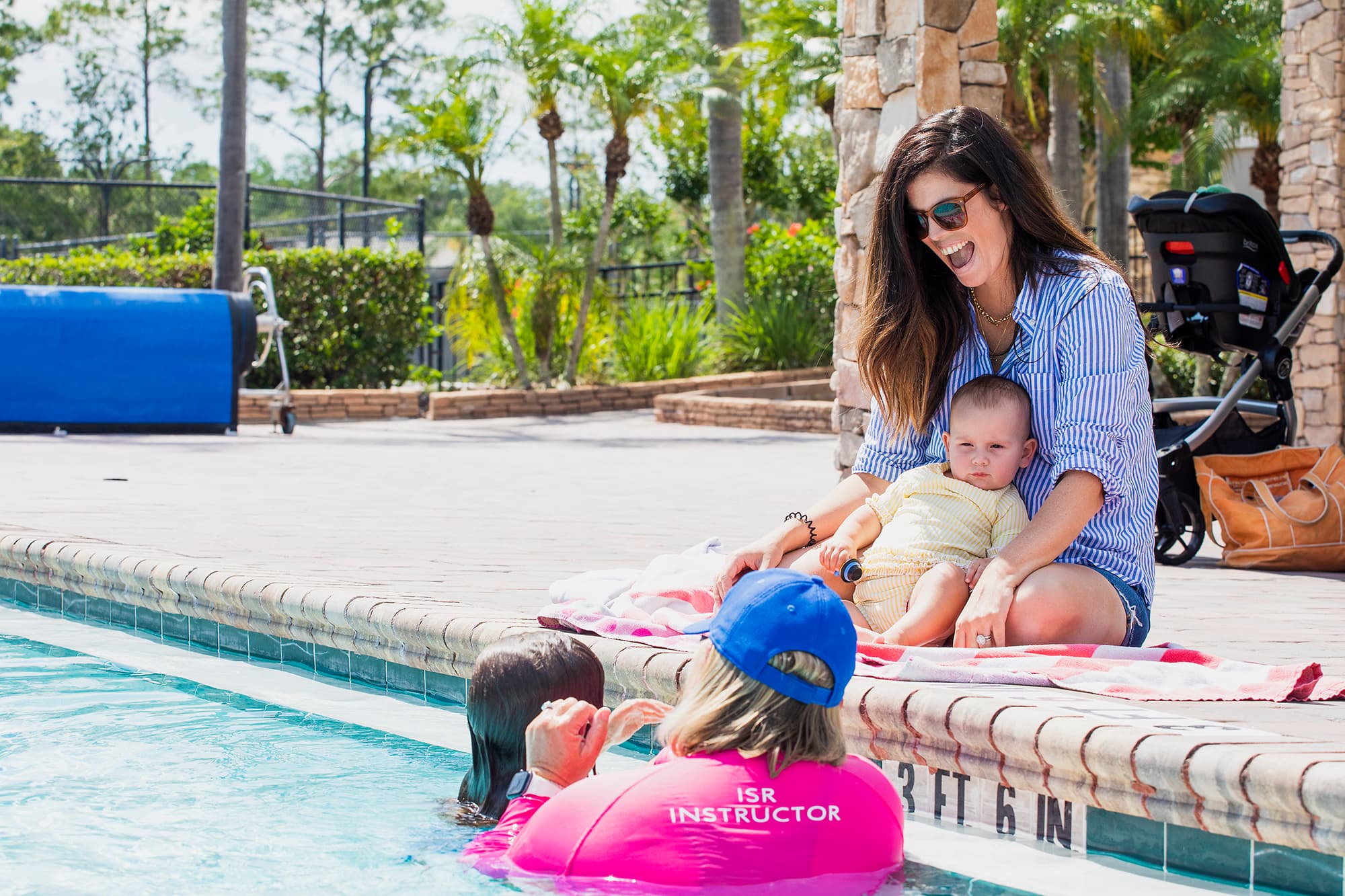
Before your first lesson
Expect short recurring lessons, a calm handoff routine, and parent updates that explain what your child is practicing and why.
What to bring
Bring towels, a swim diaper if needed, dry clothes, water, and any health updates your instructor should know before that day's lesson.
What not to do before lessons
Avoid heavy snacks, rushed arrivals, surprise schedule changes, or coaching from the deck. A calm, predictable handoff helps the lesson start well.
Why lessons are short
Short lessons help children practice focused skills while giving instructors room to respond to fatigue, weather, and daily readiness.
What crying may mean
Crying can reflect separation, effort, fatigue, or a new routine. Your instructor will help you understand what is normal and what needs adjustment.
How to support your child
Keep handoffs steady, use the same arrival routine, avoid surprise pressure, and let the instructor lead skill practice during lesson time.
Water safety layers
Lessons support safety, but families should keep using close supervision, locked barriers, alarms, CPR readiness, and a clear emergency plan.
After-session care
Plan for a calm transition after lessons. Your instructor will share notes about progress, comfort, and any follow-up needs.
Refresher timing
Refreshers may help after growth, long breaks, new pool exposure, or before a season with more time around water.
Refresher schedule
Many families review refresher options before summer, after growth spurts, or when a child has been away from consistent water practice.